A mandarin from a named region is both orchard produce and a documented commercial product. The name satsuma helps identify a citrus group, but it does not establish where a particular shipment was grown. A buyer can usefully separate three questions: which cultivar is offered, where the fruit was harvested, and who is responsible for the supply.
What the botanical source establishes
The University of California, Riverside collection lists many satsuma selections. Its Frost Owari record classifies the accession as Citrus unshiu and describes Owari as being of Japanese origin. This is reference information about a selection; it does not prove that the supplier grows Frost Owari. Sources: UCR Satsumas and Frost Owari.
Jani Life’s commercial offer names Satsuma/Unshu mandarins and gives the supplier’s address in Chakvi, Adjara. An accurate orchard description still needs the selection name, planting-material provenance and plot location. A company address should not automatically be treated as the location of every orchard.
A history worth documenting
The story of Japanese citrus arriving in Adjara needs archival or museum sources. Editorial work must distinguish a first introduction from the establishment of an experimental collection and the start of commercial cultivation. These are different events and may involve different people.
The regional context below draws on Batumi Botanical Garden’s official account. A more detailed chronology should use archival records and catalogues with page references. Family recollections can be presented as a named person’s account, rather than established history for the entire region. This preserves both the regional history and the farm’s own account.
What provenance gives a buyer
For a purchase, traceability of the current lot matters: farm or plot, season, harvest date, grading and lot reference. A compelling historical narrative does not replace those details. A useful approval package includes current-season photographs, size and packaging specifications, available quantity and shipment-specific documents.
Reading three names on one carton
The words mandarin, satsuma and unshiu can appear together in a conversation about the same fruit. A useful way to read them is as different levels of description. Mandarin identifies the familiar product category; satsuma and unshiu make the group more specific. A selection name, such as Owari, adds another level. The country of origin, grower and batch number then identify a commercial shipment. None of these fields should silently replace another.
Russian documents may use several transliterations of satsuma and unshiu. A spelling difference alone is not evidence that the fruit differs. Keep the wording in the supplier’s offer and ask for the name in Latin characters if clarification is needed. Where the selection is not documented, describing the group accurately is more useful than choosing a detailed cultivar name from a reference collection. It also avoids combining a photograph of one fruit with characteristics borrowed from another.
Chakvi and the introduction of citrus
There is an institutional source for the regional story. Batumi Botanical Garden links extensive plant introduction work in Chakvi with the early 1900s and mentions mandarin seedlings ordered from Japan. Its account also discusses earlier horticultural work around Batumi. This supports a narrative of successive efforts with introduced plants, rather than a claim that the industry began with one accidental tree. Source: Batumi Botanical Garden, citrus collection.
That regional account does not establish the ancestry of every orchard operating today. Separate planting decisions, propagation, replacement trees and changes of ownership stand between an early introduction and a present shipment. Connecting them requires a history of the particular plot. Without that chain, a statement that a company’s trees descend directly from the first imported seedlings would go beyond the evidence.
From a collection plant to a commercial orchard
For a visitor, acclimatisation raises a simple question: can an introduced plant live and bear fruit in its new surroundings? A grower has a longer list. The questions include how regularly it produces, how it can be managed, what the fruit is like, whether it suits transport and whether buyers want it. A plant’s presence in a collection and its use in a commercial orchard therefore describe different achievements.
This distinction also helps when reading older records. An entry documenting receipt of planting material establishes receipt. A note about fruiting establishes an observation at the stated place and time. A record of commercial sales adds another piece of evidence. A careful historical account preserves those differences instead of treating each early mention as the birthday of an entire industry. It can recognise the work of researchers, gardeners and later commercial growers without assigning all their contributions to a single event.
Why a reference calendar is not a shipment calendar
The same named selection may appear in descriptions from several countries. A ripening period recorded in a collection belongs to observations made at that location. An overseas buyer needs a different calendar: expected harvest, preparation of the lot and the date when loading is possible. A familiar cultivar name cannot provide those dates on its own.
In a purchasing schedule, use three separate entries. The expected season supports early demand planning. Confirmed readiness follows an assessment of the orchard and available product. The loading appointment belongs to an agreed shipment. Calling all three the season invites a planning assumption to be mistaken for a commitment. Ask for the available loading window and agree how changes will be communicated. This makes the discussion more precise without demanding a false promise months before the fruit is ready.
Variety history and the experience of a sample
A historical name helps a buyer find references, but a sample is where product evaluation becomes practical. Separate the observations: ease of peeling, segment texture, the perceived balance of sweetness and acidity, and consistency within the pack. These describe the intended customer’s experience. They are not an attempt to identify a cultivar conclusively from a single taste.
A simple sample card makes comparisons easier. Record a sample reference, receipt date, packaging condition, the supplier’s description and your own observations. If the first purpose is to compare the fruit itself, evaluate it before discussing price. Keep instrument readings in a separate field. A tasting judgement and a measured result should not become one invented specification. The outcome should be a clear conversation about the product required, rather than an argument about which historical name sounds more attractive.
Telling the origin story on a website
Start with the present product, then add context. Show the product name and growing origin first, followed by information about the business, a short explanation of the citrus group and a link to the regional story. A buyer who needs a shipment can find the practical facts quickly; an interested reader can continue into the history.
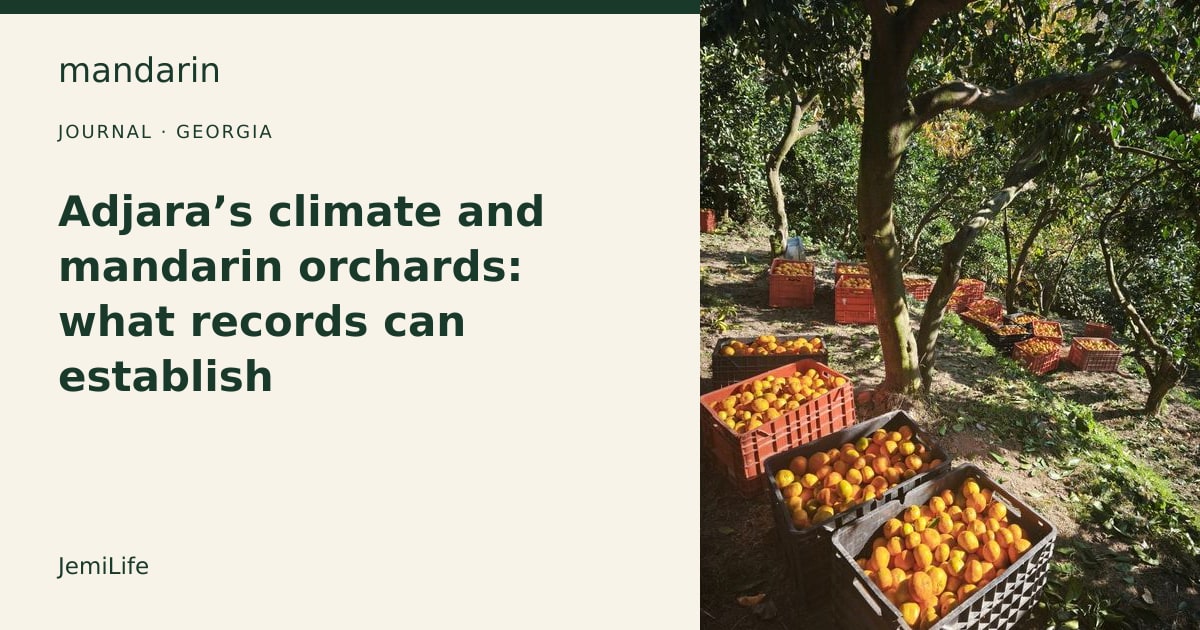
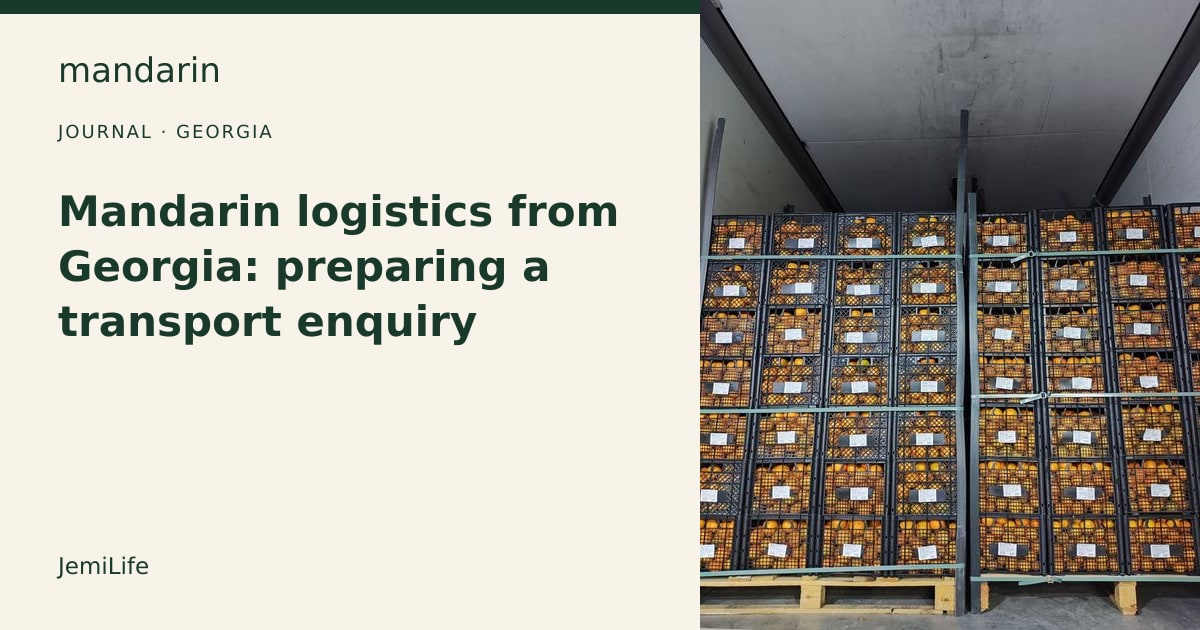
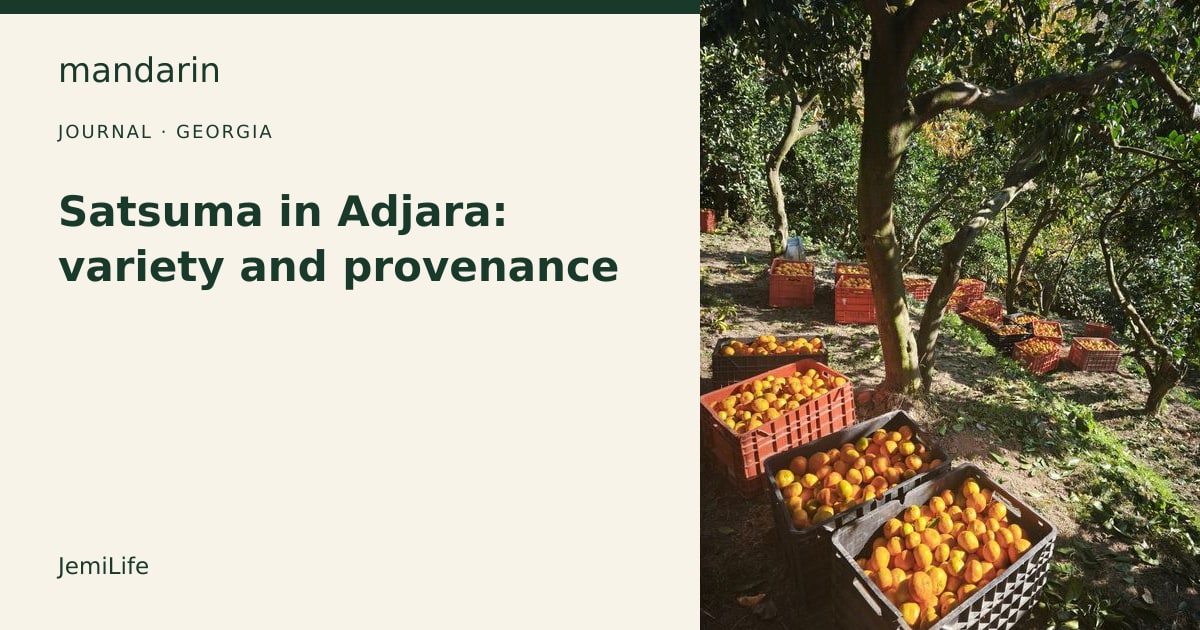
An orchard photograph is useful when its location, date and photographer are known. A caption describing the scene on the day it was taken may sound less dramatic than a claim about century-old trees, but it can be checked. An orchard view, fruit on a branch and the label on a prepared lot each serve a different purpose. A landscape photograph should not be treated as proof of cultivar identity or harvest volume. The image supports what it actually shows.
Questions that make a grower’s interview useful
When a business has family memories or production records, begin with something concrete: an old photograph, a land document, a planting plan or a record of an early sale. Ask who appears in the photograph, where it was taken and how the date is known. Then discuss changes in orchard work, packaging and selling methods. Specific questions usually produce a more informative account than a general invitation to talk about tradition.
Identify an interviewee by name and role. If a date is approximate, preserve that uncertainty in the wording, for example by attributing a recollection to the family and using a period rather than an exact year. There is no need to turn memory into a precise calendar. Readers benefit from knowing where a document ends and personal recollection begins. That boundary also makes it easier to incorporate later discoveries without rewriting the entire story.
Bringing the story back to a purchase
Satsuma-unshiu connects a familiar fruit with a wider history of citrus cultivation. A purchase still depends on the current lot. The group name provides shared vocabulary, the history of Chakvi gives regional context, and the sample and specification establish whether an offer fits the buyer’s purpose. Keeping those functions separate makes all three more useful.
For a practical next step, prepare the destination country, required weight, preferred fruit size and delivery window. Add the properties that mattered when evaluating the sample. These details turn interest in the origin of the fruit into a focused discussion of available product and order terms, while leaving the historical story intact.
Keep the original source of the offered name as well: an email, accepted specification or label photograph. If a different spelling appears later, return to the original and clarify whether the product changed or only its translation. This is useful in international purchasing, where the same product may be discussed in several languages. It does not establish a plant’s ancestry, but it supports accurate descriptions throughout the transaction and helps avoid an accidental name substitution during document preparation.
Start with variety requirements, then agree on lot acceptance. Use the mandarin product page for a wholesale enquiry.