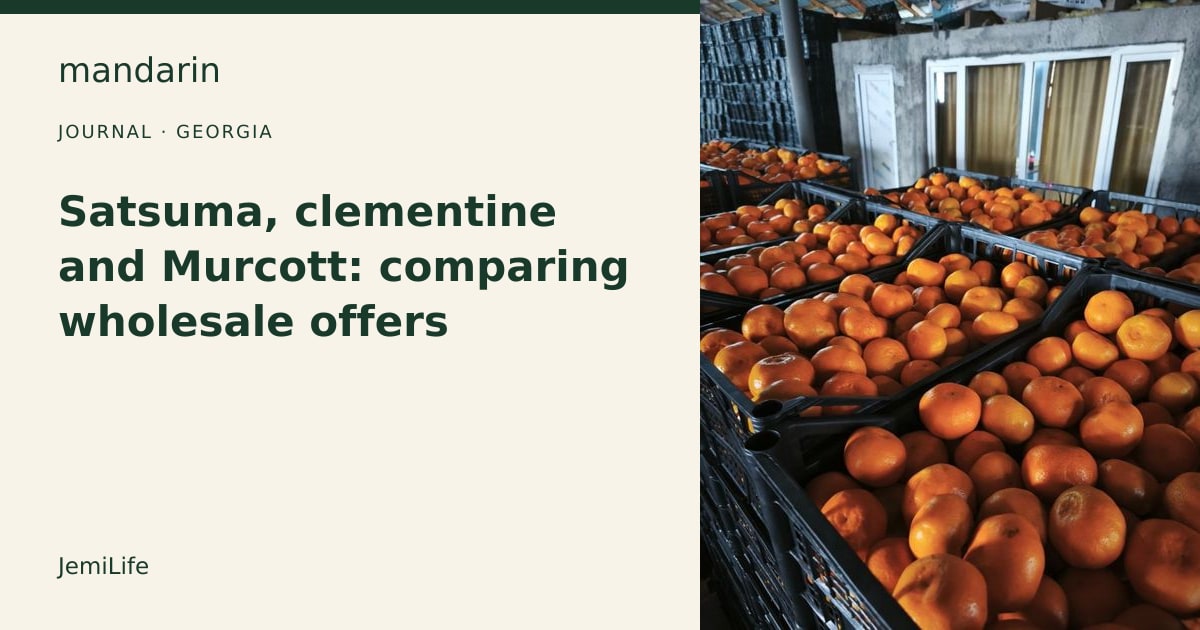
When choosing mandarins for a wholesale shipment, begin with the lot’s intended use: selling whole fruit, repacking or another agreed purpose. A cultivar name alone is not enough to select a supplier. You need a specification and a sample of the current produce.
Names do not replace precise identification
UCR maintains a group of satsuma selections. An offer described as “unshiu” should therefore be clarified to the selection known to the supplier, rather than assuming that all such fruit is identical. Source: UCR, Satsumas.
UCR’s Murcott record describes a thin rind and variable seed numbers. These reference traits help frame questions but cannot guarantee a lot’s characteristics. A season reported for Riverside should not be transferred to Georgia. Source: UCR, Murcott.
Clementine offers also need a selection name and sample description. The Algerian clementine reference below explains the name but does not establish the offered lot’s properties. A seedlessness claim needs an agreed specification and assessment.
A buyer’s working comparison
| Parameter | What to request |
|---|---|
| Name | Group, cultivar or selection in records |
| Origin | Country, plot or traceable supplier |
| Seeds | Results from an agreed sample |
| Peel | Sample, ease of peeling and accepted damage |
| Size | Millimetre range and lot tolerance |
| Flavour | Agreed sample and measurement method |
| Timing | Readiness date for the particular quantity |
This is a negotiation tool, not an international classification or a promise that Jani Life supplies all three groups. The available commercial offer names Satsuma/Unshu rather than the entire comparison range.
Questions before ordering
Can a photograph be enough? It helps assess appearance but cannot confirm cultivar, seeds or the characteristics of the whole lot.
Does bigger necessarily mean better? For procurement, suitability follows the agreed use and specification. Agree size separately from price and packaging.
How can a comparison be repeatable? Record the parameters and sampling conditions before ordering, and attach results to the offer being discussed.
What the clementine example adds
UCR maintains a separate record for Algerian clementine. It links the naming history to a selected seedling and Brother Clement, while discussing differing historical accounts of its origin. For purchasing, the practical lesson is simple: a group name starts the conversation, but the particular selection and the offered product’s characteristics still need clarification. Source: UCR, Algerian clementine.
Do not combine all clementines into one supposedly identical product. Likewise, Murcott does not replace a prepared lot description, and unshiu does not establish fruit size. Begin a comparison by recording the full commercial name in each offer, then add the attributes. Where the descriptions differ in precision, identify the gap rather than filling it with assumptions.
Start with the eventual customer
The same sample may suit loose retail sales, a prepacked selection or kitchen use differently. The first entry in a comparison card should therefore be the intended use. For packing, discuss the desired weight and fruit count per consumer pack. For loose retail, consider presentation and consistency. For kitchen use, consider preparation and the requirements of the dish. These are distinct criteria, rather than a general beauty contest between fruit names.
Separate essential requirements from preferences. If seed content is important to the customer, make it a specific assessable item. If size is a preference, list acceptable alternatives. This helps compare available offers without searching indefinitely for an ideal description, and gives a supplier enough information to suggest a relevant alternative.
Organising a sample comparison
Agree where the sample comes from before it is sent. It should be connected to the offer through a preparation date, lot reference and an explanation of the volume it represents. A fruit selected for a photograph and an agreed commercial sample have different evidential value. Establishing the role of the sample early reduces disagreement later.
Give received samples neutral references. Record receipt time and packaging condition, then follow the same sequence of observations. If one sample is assessed immediately and another after different storage conditions, attributing the difference solely to variety becomes difficult. A formal comparison needs a method agreed with the responsible inspector; an informal tasting should not be described as a standardised test.
Peel, seeds and segments need separate entries
Describe peeling in terms the customer can understand: how easily it starts, how the peel separates and how convenient the segments are to divide. Avoid a universal score unless the scale is defined. Where several colleagues participate, agree what each score means beforehand. Otherwise, a single number will conceal different judgements.
Record seeds in the fruit actually examined and preserve the connection with the sample. An external photograph cannot show that fruit has no seeds. Nor should an observation from a few fruit become an absolute promise about a future consignment. A contract needs an agreed criterion and checking method. The sample card supports that conversation, provided both parties understand its limits.
Describing and measuring flavour
Flavour assessment becomes more useful when preference is distinguished from description. A taster may legitimately say they like a sample, but that is difficult for a supplier to reproduce next time. More specific comments about perceived sweetness, acidity, juiciness and texture explain the choice. Keeping individual notes before the group discussion also helps prevent the first comment from shaping everyone’s response.
Instrument readings need a separate entry with the method and sample reference. Do not label every refractometer reading as sugar content without identifying the measure and method. Acceptance thresholds should come from an agreed specification. An internet comparison table can suggest questions; it does not automatically establish the customer’s purchasing requirements.
Comparing prices on the same basis
First align the offers by currency, net weight, packaging, handover location, quantity and quotation validity. Otherwise, a price difference may reflect the scope of the offer rather than the variety. Fruit priced at a warehouse and an offer that includes additional operations need a breakdown before their figures can be compared sensibly.
Keep two cost columns: confirmed required costs and costs still unknown. Do not enter zero for an unknown item. If packaging is undecided, request a separate option. If transport pricing depends on the date, retain the quotation date. The table then shows the real state of negotiation instead of only an attractive minimum figure.
Timing and repeat orders
A purchase may be a one-off lot or part of a repeated programme. For a single lot, discuss available volume and the loading window. For repeat orders, clarify what the supplier expects to maintain: the group name, a specific selection, a size range, packaging or an agreed quality level. Not every attribute will necessarily remain unchanged, so the phrase same product needs explanation.
Agree a substitution process as well. If the original offer becomes unavailable, the supplier should know which alternatives can be discussed and which are unsuitable. Record whether a new sample or confirmation is needed before loading. This makes the variety name one useful part of the order description instead of leaving it to carry the entire agreement.
A decision card that can be used again
A completed card can contain five sections: intended use, exact offer description, sample results, commercial terms and open questions. Every measurement or observation should retain its date and source. Add a short reason for the selection, such as suitability for an agreed pack and customers’ peeling preference. This is a suggested decision format, not a testimonial about a particular shipment.
The same card can inform a later seasonal discussion. It preserves why the earlier product was chosen and makes changes in a new offer visible. A comparison of unshiu, clementine and Murcott then becomes a practical purchasing tool: familiar names guide the search, while the decision rests on samples, requirements and terms the parties have actually agreed.
When two offers seem similar
If both samples meet the main requirements, compare how clearly the remaining terms are defined. Is packaging confirmed? Is available volume understandable? Is a follow-up date agreed? Can the sample be connected to the future lot? These questions do not determine a cultivar’s botanical quality, but they help assess whether a particular offer is ready to order. Record answers consistently and separate confirmation from preliminary discussion.
A winner is not needed for every individual attribute. Two acceptable options can be recorded with the conditions under which each fits. One might be considered for an agreed pack and the other for an order with different requirements. This is a hypothetical way to organise purchasing, not a description of available stock. It preserves flexibility and makes the eventual decision understandable to colleagues who did not attend the tasting.
Next agree acceptance and transport. An enquiry for mandarin supply can include size and packaging preferences.