Origin is a useful part of a mandarin’s product description. A region’s name alone, however, cannot establish which crop-protection products or postharvest treatments were used. For a wholesale purchase, questions about “natural” produce are more useful when turned into specific information the supplier can substantiate.
Climate is not a laboratory report
A weather description does not establish residue levels in a lot. Humidity and temperature describe growing conditions; a laboratory result relates to the tested sample. Connecting the two without evidence from the particular orchard would be unjustified.
This article therefore makes no promises of “chemical-free” or “untreated” fruit, or that climate reduces pesticide requirements. It also does not claim that no wax is applied after harvest: that needs a producer response and records of lot preparation.
Questions to ask the supplier
Ask for orchard management and postharvest preparation to be described separately. For the former, dated agronomist records and products used are useful; for the latter, ask about washing, grading, coatings and storage. Naming a method without a record connected to the lot gives an incomplete picture.
FAO describes integrated pest management as an approach combining methods of pest management. The existence of that approach does not establish that a particular farm follows it. Source: FAO, Integrated Pest Management.
Reading a laboratory result
Before drawing conclusions, match the lot reference, sample date and procedure, tested substances and analytical methods. A document for another shipment must not be presented as a test of the current lot. A responsible specialist should explain the conclusion in the context of the destination market.
For a supplier website, a document cleared for disclosure with an understandable scope is more useful than a general quality badge. A document missing from website materials does not prove a violation; it means the corresponding advertising claim has not yet been substantiated.
Connecting the account with a season
Descriptions of actual operations, photographs with known provenance and control records connect a regional account to a specific season. Information about that example belongs to its stated period and should not automatically be extended to future harvests.
Which weather information is useful?
A description such as humid subtropical climate provides regional context, but understanding a season requires a sequence of observations. Annual rainfall is one question; its timing in relation to flowering, fruit development and harvest is another. The same annual total can contain quite different wet and dry periods. A useful account therefore starts with the dates and places of observations rather than a single impressive number.
When publishing a climate table, identify the station, averaging period and its relationship to the orchard being discussed. Show the current season separately. A long-term measure describes typical conditions, while observations from the present year describe that year. Combining them without labels leaves readers unsure whether they are looking at a normal, a forecast or a measurement. A small transparent table is more informative than a large graphic with no clear source.
Water involves more than rainfall
FAO explains crop water needs through evaporation and transpiration, affected by sunshine, temperature, humidity and wind. Rainfall alone therefore does not describe the full water situation. This general framework helps formulate questions about an orchard; it does not supply an irrigation schedule for a particular site in Adjara. Source: FAO, Crop water needs.
Ask the agronomist how soil conditions are observed and what information informs water management decisions. Are observations recorded by plot? How are problem areas identified? Who checks conditions after substantial rain? A buyer does not need to design an irrigation system. The useful point is to understand whether the account of the season is connected to observations in the orchard, rather than only to the weather in a nearby city.
Drainage and access for orchard work are separate discussion points. Without attempting to assess the engineering, a buyer can ask how work is rescheduled after rain and how access for harvest is maintained. Relate the answer to actual operations: inspection, a revised picking date, preparation of containers or movement to sorting. This turns weather into an understandable part of production planning.
One region can contain different orchard settings
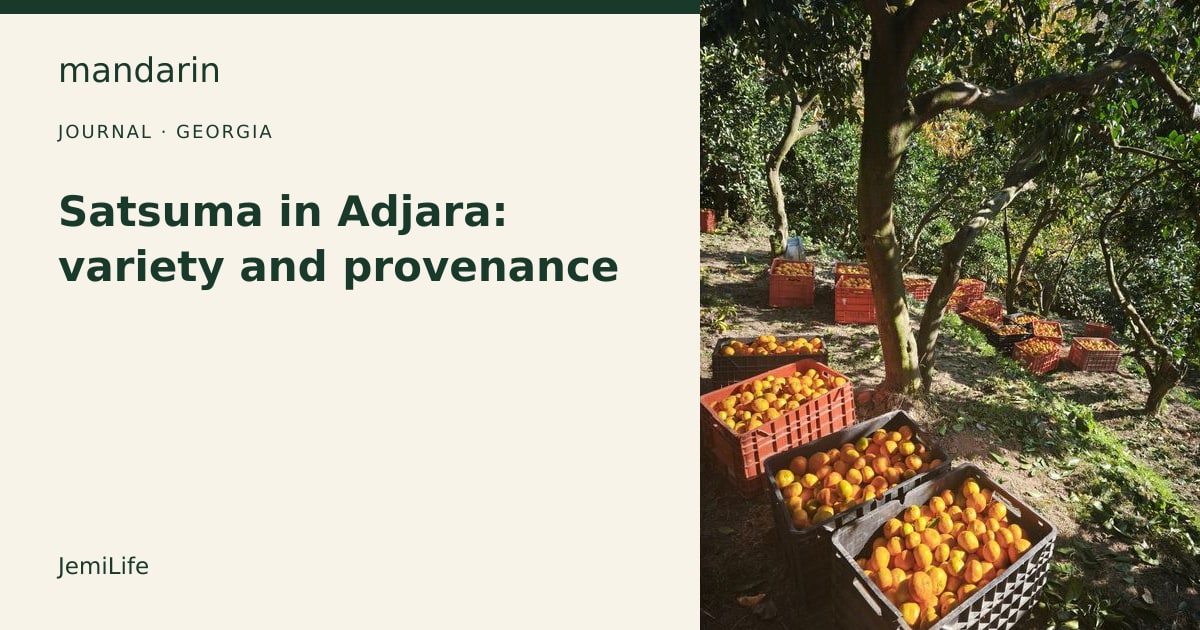
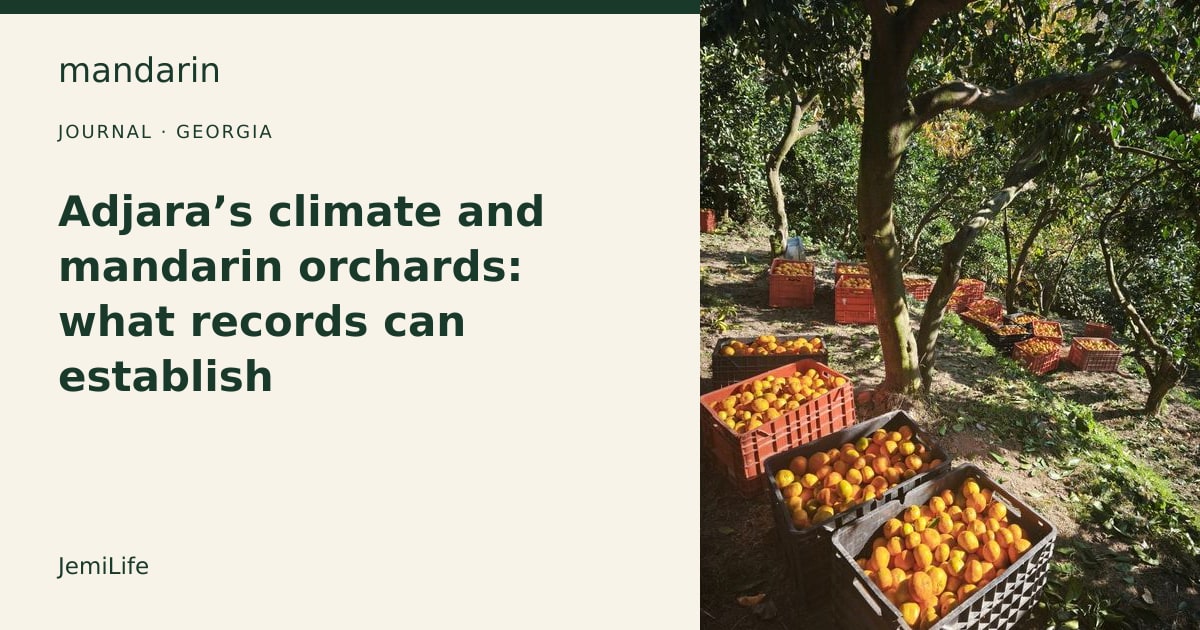
Location, terrain, exposure and surrounding land all belong in the description of a growing site. A town name provides orientation, but does not explain the conditions of every row of trees. A simple plot plan with consistently labelled photographs can support a more precise conversation. Exact coordinates do not have to be published for the records to be useful internally.
Separate records are particularly helpful when a shipment combines fruit from several plots. The buyer may receive one consignment assembled from multiple original lots. Its regional story remains relevant, while traceability should explain how those lots were combined. That arrangement is not automatically a weakness. The purchasing questions are whether the structure is clear and whether the agreed product characteristics apply consistently across it.
Discussing weather and flavour carefully
One tasting sample cannot explain the effect of an entire season. Before discussing a connection between growing conditions and fruit quality, establish what is being compared. It might be samples from one identified plot on different dates, or several lots evaluated using the same method. Each needs a date, sample reference and assessment method. Without that basis, a claim that this year’s fruit is sweeter because of the weather remains an impression.
A practical report can separate three types of information: weather observations, harvest records and fruit assessment results. Do not force one set of records to explain another. If soluble solids measurements are included, provide the sampling and instrument details. If the assessment is a tasting judgement, label it accordingly. A limited, understandable observation is more useful for purchasing than an attractive causal story with no traceable comparison.
Harvest is its own decision point
A seasonal forecast and a decision to pick fruit belong to different moments. Clarify who confirms readiness, how the date is set and what happens if it changes. Buyers benefit from knowing whether they will receive an update before a vehicle is dispatched and which contact can make the decision. This helps avoid a situation where transport has been booked while the actual readiness of the lot is still being discussed.
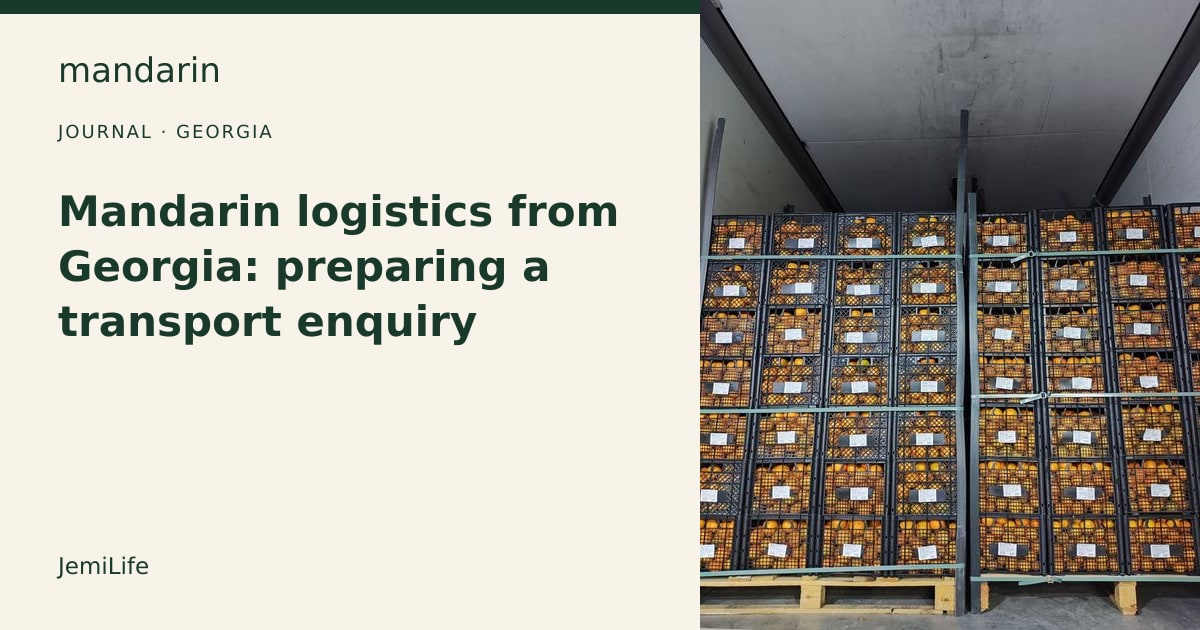
After picking, a different sequence begins: movement, sorting, packing and preparation for loading. Record these as separate events. A statement that fruit was picked on Monday does not say how long it took to reach packing or where it was held in between. A clear sequence makes later discussions about condition more factual and reduces speculation about where a discrepancy may have arisen.
A short seasonal report for a buyer
A useful report can fit on one page. Start with the period and plots covered. Add a concise account of observations, actual operation dates and available control results. End by distinguishing conclusions about this lot from questions that will be revisited at the next assessment. This structure allows information to be updated without rewriting the business’s whole history.
Instead of a general statement about excellent weather, consider a record with the inspection date, plot, observation, person responsible, decision and follow-up date. This is a suggested template, not a report of a real Jani Life season. Its value lies in linking an observation with an action. Once a grower supplies actual entries, readers can see the production decisions behind the product description.
Photographs that explain a season
An orchard view shows the setting. A sequence can explain more: the plot, fruit on the tree, harvested containers, sorting and the label on a finished lot. Each image benefits from a date, a plot-level location and a description of the operation. Photographs from different years should not be presented as if they document one shipment. If an archive image explains a process, identify it as an archive image.
The public selection may be shorter than the internal report. A website does not need to display every operational record. It can use verified extracts that remain connected to the underlying documents. Permission to publish an image and accuracy of its caption are separate checks. Even a file held by the business needs a clear origin if it is used to support a statement about the orchard.
Questions before placing an order
Ask which plots the offer covers, when readiness information was last updated, what preparation operations are included and which control documents are available for discussion. Then agree how these details will be connected to the shipment reference. Questions about climate can lead naturally to a practical description of the product and the work behind it.
The regional story gives context. For a purchase, combine it with current observations and traceable preparation of the lot. Together they support a specific conversation: what fruit is offered, what is known about it and how the parties will assess the agreed properties at receipt.
Continue with lot acceptance and logistics. Discuss purchasing requirements through a wholesale enquiry.