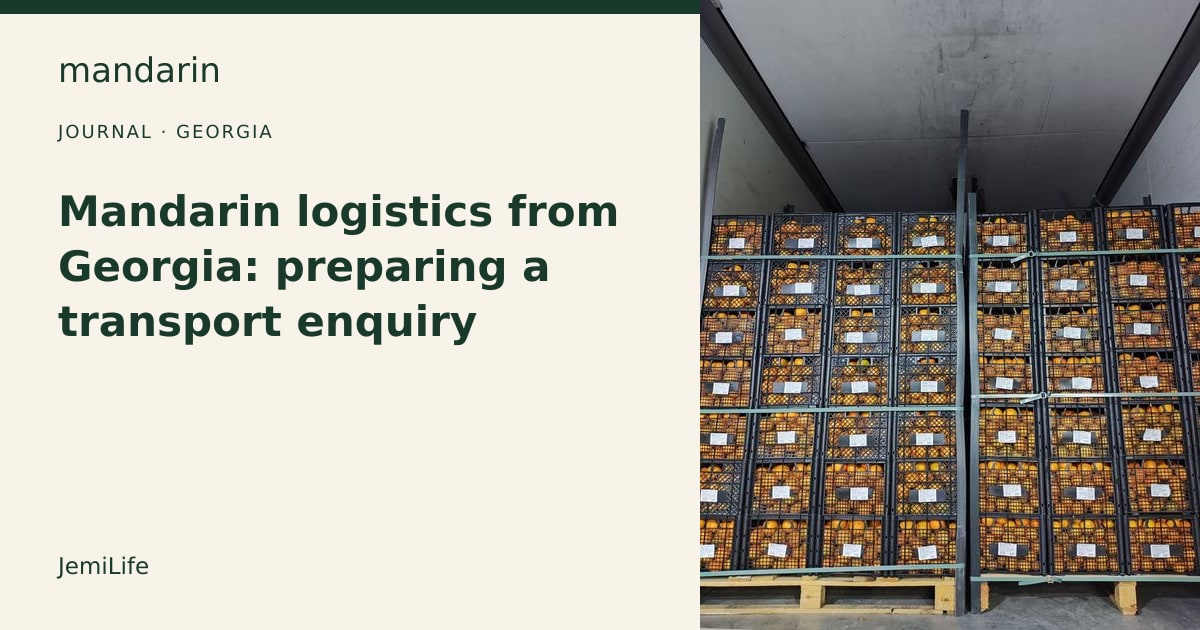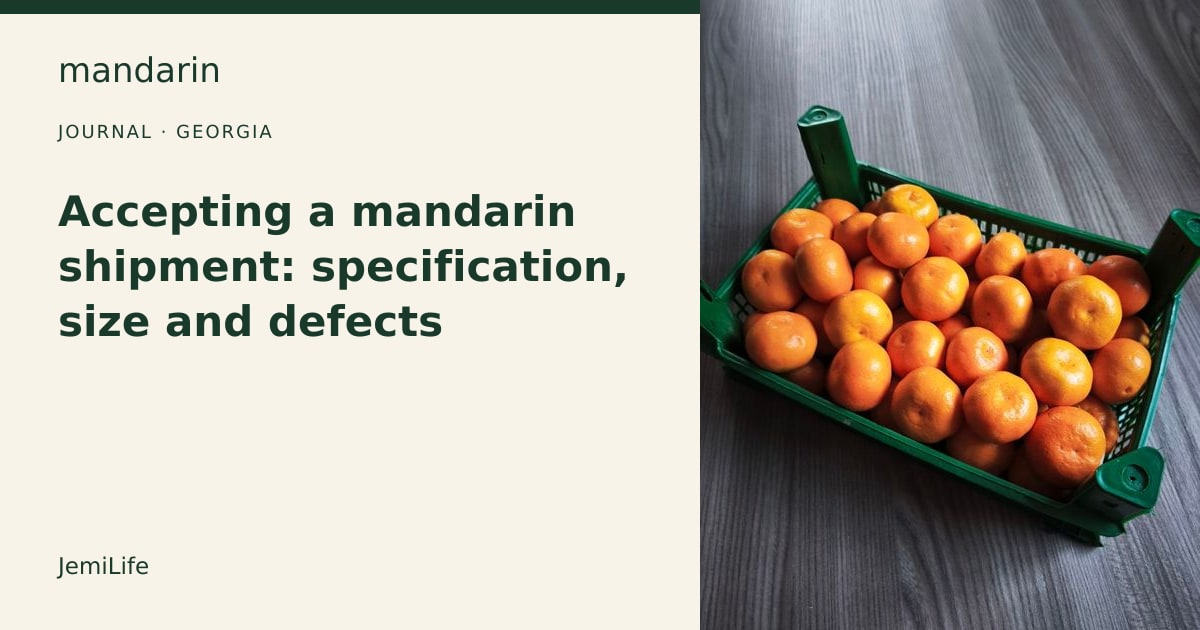
Acceptance begins before loading: buyer and supplier need the same understanding of what has been ordered and how conformity will be checked. This article provides a working discussion framework, not a standard that replaces the contract.
Agree on the basis of inspection
Record the product name, origin, size, packaging, quantity, date and inspection location. Separately define the sample size, access to cartons and the actions to take if discrepancies are found. One well-chosen fruit does not characterise a load.
UNECE publishes the FFV-14 citrus standard. If the parties use it in their specification, they need to identify the agreed edition and applicable provisions instead of simply writing “to standard”. Source: UNECE, Citrus fruit. This article does not reproduce the standard’s numerical tolerances.
Fruit size and package weight
Jani Life’s commercial offer lists 35–50, 50–65 and 65–80 mm ranges and a 14 kg box. Confirm these details for the current order. The offer’s ranges should not be described as international size codes.
For a shared boundary such as 50 mm, agree how fruit is assigned to a group and the permitted variation. For packaging, clarify whether the stated weight is net, which tare is weighed and how results are recorded. This avoids disputes between measurements made under different rules.
Brix and visual inspection
If soluble-solids measurement is part of the purchase, agree the instrument, sample preparation and result record. A number without a method and sample description is difficult to use in a claim. Do not choose a threshold arbitrarily from an online article.
Record visible damage, packaging condition and inconsistency against the lot reference. Photographs should show an overview, labels and the particular discrepancy, with a date and explanation. This proposed checklist does not replace the appointed inspector’s work.
When a discrepancy is found
Retain measurement records and agree next steps with the people responsible under the contract. Notification periods, independent inspection and dispute handling should be defined before shipment. The website does not promise automatic compensation based on a photograph.
Prepare a sequence rather than an improvised inspection
Separate document checks, vehicle observations, quantity checks, sampling and the final decision. When everything happens at once without assigned responsibilities, important observations can be lost. Buyer and supplier should know who can sign the result and who receives questions. This is particularly useful when a warehouse handles receipt while another employee arranged the purchase.
A working instruction can identify the inspection location, available instruments and record storage method. Use clear file names containing the lot reference, date and observation type. Preparing this structure is easier than reconstructing events later from several message threads. It also helps another employee repeat the process without relying on unwritten assumptions.
Match documents with the actual labels
Start by confirming that the documents describe the arriving goods. Compare the product name, lot reference, package count, packaging description and sender information. If documents use different internal references, ask how they relate. A difference is not automatically evidence of a breach, but an unexplained one makes later records harder to use.
Photograph labels before the packaging loses its original arrangement. Identify the pallet or carton group to which each image belongs. If the consignment contains several original lots, preserve those distinctions in the report. This allows any discrepancy to be discussed at the appropriate scale rather than extending an observation from one carton to the entire load without a basis.
Observe before and during unloading
A general image records the load arrangement at opening; a close image records a particular detail. Both are useful. Separate observations made before unloading from those made after containers have been moved. Record time and sequence, especially where packaging condition is being discussed with a carrier.
Where temperature monitoring is agreed, connect the records to the journey and measurement position. Equipment setpoint, air temperature and fruit temperature are different measures. Do not combine them into one unexplained cargo temperature entry. Someone who was not present should be able to understand who measured the value, where and with which instrument.
Agree sampling before seeing the result
The inspection should not quietly select only convenient or attractive fruit. The parties or responsible inspector should define the sampling method before evaluating its result. Record how many packages were opened, how they were selected and how many fruit were examined. These details show what the inspection actually covered.
If variation is observed, record its location. Differences between pallets, upper and lower cartons or original lots may need separate consideration. If the sample is expanded, record that decision and its basis. Do not rewrite the method retrospectively merely because the initial result was inconvenient to one party.
Recording fruit size
Size records need units, the instrument used and the agreed measurement method. Where contract ranges share a boundary, define how a fruit at that boundary is classified before inspection. Avoid rounding readings merely to place them in a preferred category. Retain the original measurement and show the classification rule separately.
A useful table contains the sample reference, reading, assigned category and a note. Category totals then come from that table rather than memory. If another inspector repeats some measurements, individual records can be compared to investigate the difference. That is more useful than two conflicting totals with no underlying observations.
Net weight, packaging and shipment counts
Before weighing, establish what the order’s weight means. A filled carton’s weight is not the fruit’s net weight when packaging is included. Agree how tare is determined and how additional packing materials are treated. Keep the readings and calculation so the result can be checked later.
Record package count separately from weight. Where some cartons use different packaging, give them their own entry. Organise a large count by pallets or identifiable groups. The result should allow actual receipt to be compared with the documents without assuming that visually identical cartons necessarily weigh the same.
Describe damage precisely
Instead of writing poor quality, describe what was observed, how many inspected fruit showed the characteristic and where they were located. A single photograph need not establish the cause. Observation and a conclusion about causation are different parts of an investigation. If expert assessment is required, the original records allow the specialist to work with a specific case.
Use a scale or another clear reference in photographs where the size of a detail matters. Capture the label, general context and observed feature. Avoid colour or contrast changes that alter the apparent condition. A clear sequence connected to a sample is valuable; artistic treatment is unnecessary in an inspection record.
Write a usable result
The final record should show the acceptance basis, actual inspection scope, findings and decision by the designated people. List unresolved questions separately. If some goods require further consideration, the warehouse and contractual parties need a clear identification of them. A verbal comment with no lot reference or quantity becomes difficult to use after goods have moved.
Keep original images and readings with the conclusion, or connect them through a stable reference. Date and explain corrections while retaining the original entries. This distinguishes clarification from accidental data loss and makes later discussion more factual. The purpose is to reconstruct what happened and why a decision was made.
Improve the next order
After receipt is resolved, compare the difficulties with the original specification. Perhaps a boundary-size rule, packaging description or relationship between document references was missing. Correct the specific gap in the next order. There is no need to turn every comment into an elaborate new procedure; address the point where the parties understood the requirement differently.
Inspection becomes more effective when its results inform order preparation. An agreed method, understandable sample and preserved original records support a concrete quality discussion. They do not replace the contract, but help apply it to the actual lot and distinguish measured discrepancies from general impressions.
A small team can rehearse the procedure using an empty report. One person reads the specification while another shows where each observation will be recorded. A missing field or unclear decision responsibility can then be found before the goods arrive. The form should not force anyone to invent data: where a check was not performed, include an explicit status and reason. This preparation supports accurate records on a busy receiving day.
Check cultivar and sample requirements, then transport conditions. Include the required specification in a wholesale enquiry.