Transport cost and timing cannot be established reliably from the country of origin alone. A quotation needs loading and delivery points, cargo readiness date, quantity, packaging and acceptance requirements. These details allow carrier quotations to be compared on a like-for-like basis.
Road transport or a sea route
Neither road nor sea transport is presented here as an available Jani Life service; the points below apply only if that option is confirmed for a particular lot. For road delivery, clarify warehouse access, loading and unloading conditions, intermediate operations and temperature-monitoring responsibilities. For a sea option, also establish ports, an available service, schedule and operations before and after the sea leg. The existence of a port does not establish a suitable sailing.
No carrier quotations have yet been obtained for the project’s routes, so this article gives neither a current rate nor a fixed transit time. Timing needs to cover the agreed operations rather than vehicle movement alone.
A cold chain needs records at every stage
The historical UC Davis reference gives 5–8 °C and 90–95% relative humidity for an indicative 2–6 weeks depending on cultivar, maturity and treatment. It was last updated in May 1999 and is not a regime, instruction or shelf-life guarantee for a particular Jani Life lot. Source: Arpaia and Kader, Mandarin.
Before shipment, the responsible specialist needs to agree settings for the particular produce. The carrier enquiry should cover monitoring, measurement location and sharing records. Refrigeration setpoint and measured fruit temperature are different data and should be distinguished in reporting.
Information for a quotation
- Product and available specification.
- Net weight, package count, packaging and pallet dimensions.
- Addresses and loading or unloading restrictions.
- Preferred date and acceptable arrival window.
- Agreed temperature conditions and recording requirements.
- Required documents and people responsible for checking them.
This enquiry sheet does not imply that the supplier has already confirmed every parameter. Buyer preferences should remain distinct from instructions accepted by the carrier.
Commercial terms
An ex-warehouse product price and a delivered price are different offers. The contract needs the agreed term, named place and included costs. This text does not provide a legal interpretation of Incoterms or confirm service to every destination country.
Define the scope of the quotation first
Two carriers may both describe an offer as delivery from Georgia while including different operations. One quotation may begin at a warehouse and another at a terminal; one may end at vehicle arrival while another includes unloading. A sequence of operations is therefore needed beside the price. Without it, the buyer cannot see which offer fits the task or where additional costs may arise.
Describe the route from actual product readiness to handover to the receiver. For each stage, identify the operator, start and end points, information used for pricing and items still to be confirmed. The outline need not be complicated. A few clear entries can reveal a gap, such as onward delivery from a terminal or an unconfirmed receiving appointment.
Prepare a cargo profile
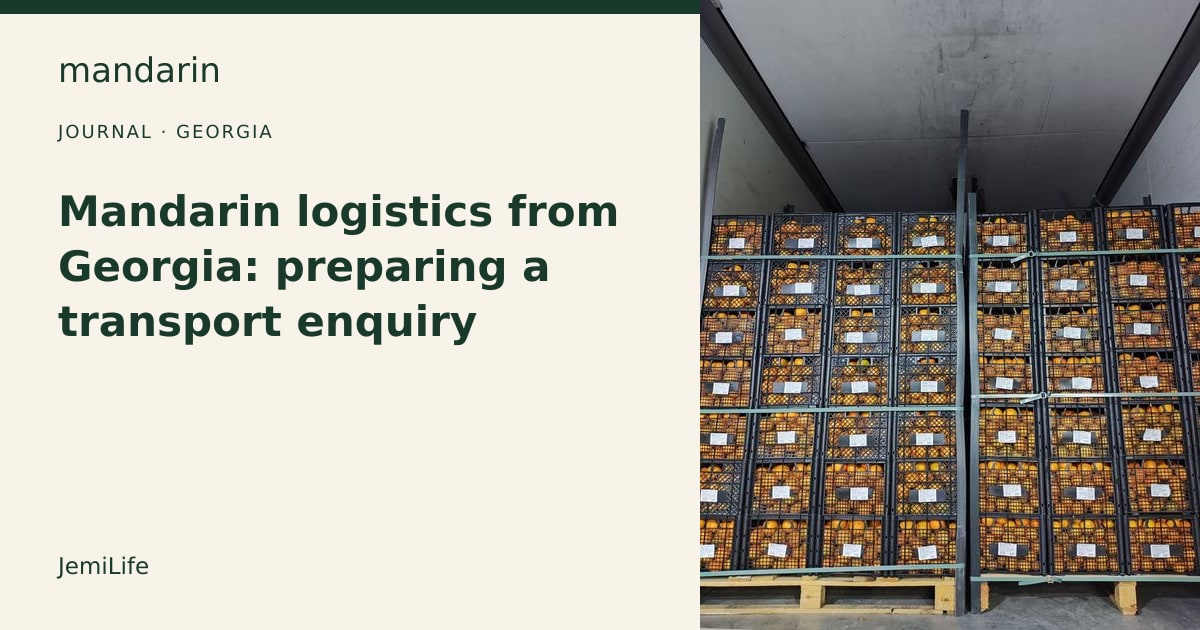
The carrier needs weights and dimensions that describe the transport task. Fruit net weight, weight including packaging and package count serve different purposes. For palletised goods, add pallet dimensions, height and actual arrangement. Do not plan loading from tonnage alone: the same weight in different packaging can require a different layout.
Keep the information in one document and date changes. If packaging changes after pricing, send the carrier an update. Retain the initial and accepted versions so the basis of the final quotation is clear. This is particularly useful when the buyer is comparing several pack formats or order quantities at the same time.
Product readiness and vehicle readiness
A date convenient for the buyer may not be the date when the lot is ready. Agree who confirms completion of sorting and packing, when transport can be scheduled and how changes are communicated. Separate confirmations for volume, documents and the loading window are useful. One general ready message does not explain which tasks have been completed.
Prepare the address, on-site contact and access limitations for the driver or forwarder. Clarify waiting arrangements, loading responsibility and where the vehicle can stand. These practical questions can be settled before the journey. They reduce avoidable discussion on arrival and make the start of transport a managed operation.
Make temperature instructions operational
The instruction should contain an agreed regime and monitoring method, not merely a number in a message. Establish who sets equipment parameters, who checks product condition before loading and who receives the records. Where data loggers are used, agree device identification, placement and data retrieval beforehand. A logger reference without a link to the journey provides limited help later.
Discuss waiting, transhipment, temporary storage and handover to another operator separately. Each transition needs a clear continuation of responsibility. The phrase continuous cold chain becomes meaningful when those transitions are described. Refrigeration equipment alone does not explain what happened to a particular lot through every stage.
Compare lead times by their components
Ask for the scope of the total lead time as well as travel duration. Preparation, departure waiting, intermediate operations and receipt may each have their own window. The carrier should distinguish confirmed components from those dependent on a schedule or other conditions. The buyer can then plan around the structure of the route rather than a single attractive date.
Understand the consequences of changes. A revised loading date may require a new arrival window, warehouse appointment or quotation. Agree who communicates updates and how the revised instruction is accepted. Keeping the update history distinguishes the first estimate from the latest agreed plan.
Check documents before dispatch
The required documents depend on the product, transaction participants and destination. The practical task is to assign responsibility and obtain an agreed list before loading. A generic online checklist is not proof that a particular route is ready. Applicable requirements need checking by the competent parties using current official sources.
For each document, record its name, preparer, relationship to the lot and checking point. If it becomes available only after a particular operation, reflect that in the schedule. References and product descriptions should connect across documents in an understandable way. Resolving inconsistent wording is easier before dispatch than while the goods are waiting at a later stage.
Compare the commercial offers consistently
Build a table with one row per operation: collection, main transport, intermediate services and delivery to the receiver. Show whether each is included, priced separately or still unpriced. An unknown cost should remain unknown rather than becoming zero. Retain each quotation’s currency, calculation date and validity.
Record price adjustment conditions and charges dependent on waiting or additional work. Discuss these with the operator for the actual order. The purpose is to understand the complete task and responsibilities, rather than select the lowest line without knowing its scope. A short quotation may require more clarification than a detailed one.
Plan the receiving handover
Before dispatch, confirm the receiving contact, address, working window and ability to unload the actual packaging. Agree which records should be made before the goods are moved and how the receiver reports the result. This connects transport with acceptance: the parties retain information about handover time, package count and observed condition.
If a question arises on arrival, preserve the observations and notify the designated people first. Avoid concluding the cause from arrival time or one reading alone. The original instruction, journey records and receipt results provide the context for discussion. Together they allow the sequence to be considered under the agreed terms.
Keep a useful record after the journey
Store the accepted quotation, final instruction, actual dates and available monitoring records with the lot reference. Add a short note about information that needed clarification. This helps prepare the next enquiry more efficiently. A completed route becomes a useful example with its context, rather than a promise of the same duration for every future shipment.
Good logistics preparation begins with a clear cargo description and ends with an understandable handover. Between them are agreed stages, responsible people and records. The question of transporting mandarins from Georgia can then become a defined task for comparable quotations and a workable decision, rather than an undefined request for a delivery price.
Before ordering, agree acceptance and fruit-preparation records. Submit the initial details through a mandarin enquiry.